ECT-PRÜFUNG
ISO 3035
Ringstauchprüfung Standard
Über uns
Überblick über die ISO 3035
ISO 3035 spezifiziert eine standardisierte Methode zur Messung der Flachstauchwiderstand von Wellpappe. Diese Methode konzentriert sich auf einseitig und einschalige Platten, und liefert ein zuverlässiges Maß dafür, wie die Riffelung senkrechten Druckkräften standhält.
In der praktischen Anwendung ermöglicht die Prüfung nach ISO 3035 den Herstellern zu überprüfen, ob eine Wellpappe die erforderlichen Mindestanforderungen erfüllt. Brechkraft, was für den Versand von gestapelten Paletten entscheidend ist. Ein Karton, der die Norm nicht erfüllt, kann zu Produktschäden oder finanziellen Verlusten führen, weil Kartons beim Transport zerdrückt werden.

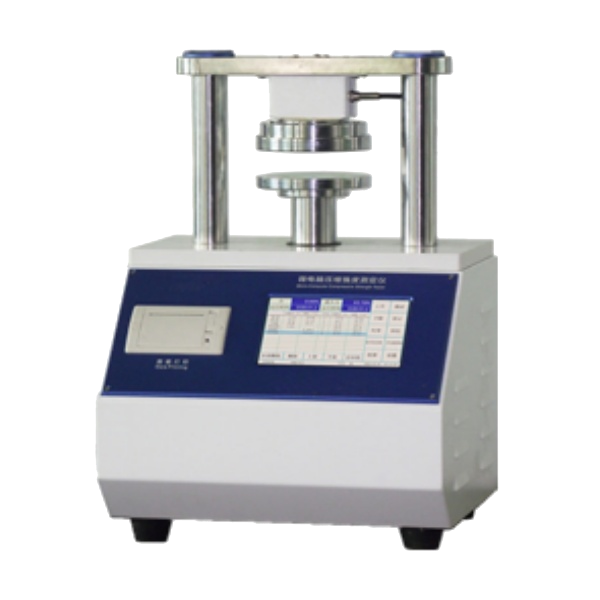
YSD-01 Quetschtester
Bedeutung der mechanischen Prüfung von Verpackungen
Mechanische Tests bewerten, wie gut Verpackungsmaterialien Kräften wie Stapelung, Druck und Handhabung standhalten. Tests wie Flachstauchwiderstand bieten Einblicke in die Tragfähigkeit aus Wellpappe.
Zum Beispiel wurde in einer Studie, die B-Flöte und C-Flöte Bretter, C-Welle Bretter wiesen etwa 20% höhere Flachstauchfestigkeit, wodurch sie für schwerere Produkte geeignet sind. Durch die Bewertung dieser Eigenschaften können Hersteller Produktschäden reduzieren, den Materialeinsatz optimieren und die Einhaltung internationaler Normen wie ISO- und ASTM-Verpackungsvorschriften sicherstellen.
Überblick über Wellpappenstrukturen
Unterschiedliche Plattentypen beeinflussen die Testergebnisse und Anwendungen:
Einseitig bedruckte Platten:
Wird häufig als Schutzschicht bei Mehrfachverpackungen verwendet.
Einwandige (doppelseitige) Platten:
Standardwahl für Versandkartons.
Doppelwandige und mikrogewellte Platten:
Nicht von ISO 3035 abgedeckt, da die Endpunkte des Zusammenbruchs unklar sind.
Zum Beispiel die Prüfung einer einseitiges B-Wellenbrett kann einen flachen Druckwiderstand von 2,5 kN/m, während a einwellige C-Wellenplatte erreichen könnte 3,5 kN/m. Solche Daten helfen Ingenieuren bei der Auswahl von Kartons für Schwerlastverpackungen im Vergleich zu leichten Konsumgütern.
Flat Crush Tester und FCT erklärt
Zweck und Bedeutung der ISO 3035-Prüfung
Das Hauptziel der ISO 3035 ist die Bestimmung der Druckfestigkeit von Wellpappe unter flachen Quetschbedingungen. Die wichtigsten Vorteile sind:
- Sicherstellen, dass die Kisten während des Transports und der Lagerung nicht zerdrückt werden.
- Evaluierung verschiedener Kartonsorten oder Riffelungen.
- Optimierung der Produktionsparameter für die Materialeffizienz.
- Unterstützung der Qualitätssicherung und Einhaltung internationaler Verpackungsstandards.
Ein Logistikunternehmen kann zum Beispiel ISO 3035 verwenden, um Platten zu vergleichen, die unter Stapelhöhen von 2 m und mehr, Dadurch wird sichergestellt, dass die Kisten in den unteren Lagen intakt bleiben und die darüber liegenden Produkte nicht zerdrückt werden.
Oher Crush Prüfverfahren
ISO 3035 Prüfverfahren: Flachstauchverfahren
Zusätzlich zu ECT, RCT und FCT, fortgeschritten Crush-Tester wie das YSD-01 können weitere wichtige Tests durchführen:
- Konditionierung: Die Prüfkörper werden in einer kontrollierten Atmosphäre äquilibriert, in der Regel 23 ± 2°C mit 50 ± 5% relative Luftfeuchtigkeit.
- Platzierung: Die Teile werden auf der unteren Walze zentriert.
- Komprimierung: Es wird eine konstante, senkrechte Kraft ausgeübt, bis die Riffelung zusammenbricht.
- Komprimierungsrate: Die Platten bewegen sich mit 12,5 mm/min ± 0,25 mm/min.
- Messung: Halten Sie die maximale Kraft fest, die vor dem Zusammenbruch der Rille auftritt.
- Validierung: Drehen Sie die Proben, um schiefe Rillen zu korrigieren und einheitliche Ergebnisse zu gewährleisten.
Geeignete Materialien sind:
- Einseitige Wellpappe
- Einwellige Wellpappe (doppelseitig)
Die Bretter müssen frei von Mängeln wie Rissen oder ungleichmäßiger Riffelung sein. Doppelwandige oder mikrogeriffelte Bretter sind ausgeschlossen aufgrund von mehrdeutige Kollapsendpunkte, um reproduzierbare und genaue Ergebnisse zu gewährleisten.
Oher Crush Prüfverfahren
Für die ISO 3035-Prüfung geeignete Materialien
Moderne Ausrüstung für ISO 3035-Prüfungen
Fortgeschrittene Instrumente wie das Cell Instruments YSD-01 Quetschprüfgerät Angebot:
- Präzise Kraftmessung und Walzensteuerung
- Digitale Aufzeichnung und Datenexport
- Kompatibilität mit ECT und Flachstauchprüfung
- Reproduzierbare Ergebnisse sowohl für die Qualitätskontrolle als auch für F&E-Anwendungen
In der Praxis ermöglicht der Einsatz moderner Geräte den Ingenieuren automatisch Prüfberichte erstellen, Sie können Trends über mehrere Produktionschargen hinweg analysieren und die Materialleistung effizient optimieren.
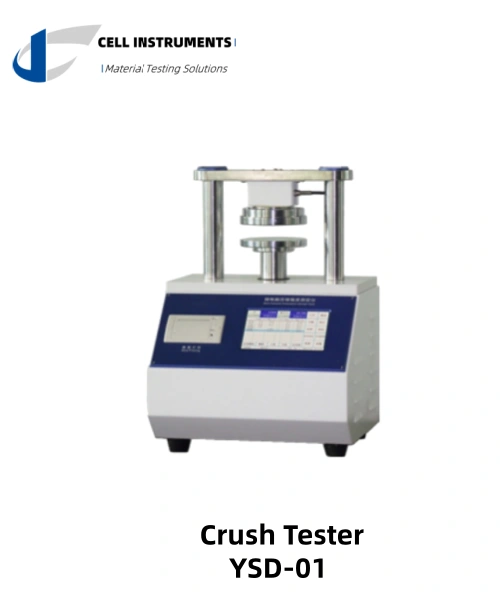
YSD-01 Quetschtester
Technische Daten
| Parameter | Spezifikation |
| Testbereich | (10±0,05) cm² |
| Messbereich | (1-9999) S, (1-15)S, (15~300) S, (300~9999) S, Dreibereichsschalter |
| Band | Großes Vakuum 380±1ml; Kleines Vakuum (38±1) ml |
| Vakuumbereich | I Getriebe 50,66kPa -> 29,33kPa |
| II Gang 50,66kPa -> 48kPa | |
| III Gang:50,66kPa -> 48kPa | |
| Prüfdruck | (100±2) kPa (Automatischer Druck) |
| Dimension | 380x360x465 mm |
| Strom | AC 220V 50Hz |
Crush-Tester ist unverzichtbar für Papier- und Verpackungshersteller, die die Haltbarkeit ihrer Produkte sicherstellen und die Branchenvorschriften erfüllen wollen. Tests wie ECT, RCTund FCT bilden das Rückgrat der Leistungsbeurteilung von Verwaltungsräten, die strengen Standards unterliegt, wie ISO 3037, TAPPI T811, ISO 3035und mehr. Mit dem YSD-01 Quetschtester von Cell Instruments erhalten Sie Zugang zu einer kompletten Testlösung, die genau, vielseitig und konform ist und sowohl die Qualitätskontrolle als auch die Kundenzufriedenheit verbessert.
- Zelle Instrumente
Häufig gestellte Fragen zu Crush Tester
Welche Materialien können nach ISO 3035 geprüft werden?
ISO 3035 ist geeignet für einseitig und einwellige (doppelseitige) Wellpappe. Sie ist nicht anwendbar auf doppelwandig oder Mikroriffelplatten weil der Endpunkt des Kollapses nicht eindeutig ist. Die Verwendung standardisierter Materialien gewährleistet zuverlässige und reproduzierbare Ergebnisse des Flachstauchversuchs, die für das Verpackungsdesign und die Qualitätskontrolle entscheidend sind.
Wie wird der Flachstauchwiderstand in ISO 3035 gemessen?
Die Flachstauchversuch wird eine Probe zentral auf einem Flachstauchprüfgerät und Aufbringen einer senkrechten Kraft mit einer kontrollierten Geschwindigkeit (12,5 mm/min ± 0,25 mm/min), bis die Riffelung zusammenbricht. Die maximale Kraft Der aufgezeichnete Wert stellt den Widerstand der Karte dar. Zum Beispiel kann ein C-Wellenbrett kann widerstehen 320 N, während ein B-Flöte darf nur erreichen 260 N, und ermöglicht Vergleiche für Verpackungsanwendungen.
Wie trägt die ISO 3035 zur Verbesserung der Verpackungsqualität bei?
Die Prüfung nach ISO 3035 bewertet die Druckfestigkeit von Wellpappe, Dadurch wird sichergestellt, dass die Kisten den Belastungen beim Stapeln und Transport standhalten. Durch die Kombination von Ergebnissen mit ECT-Prüfung oder Ringstauchprüfung Standard Daten können Hersteller optimale Kartonsorten auswählen, Verpackungsfehler minimieren und einen gleichmäßigen Schutz der Produkte während des Versands und der Lagerung gewährleisten.


Kontakt aufnehmen
Nr. 5577 Gongyebei Rd, Licheng, Jinan, 250109, Shandong, P.R.C.
marketing@celtec.cn
+86 185 6001 3985
 DE
DE  EN
EN  AR
AR  BG
BG  CS
CS  DA
DA  EL
EL  ES
ES  ET
ET  FI
FI  FR
FR  HU
HU  ID
ID  IT
IT  JA
JA  KO
KO  LT
LT  LV
LV  NB
NB  NL
NL  PL
PL  PT
PT  RO
RO  RU
RU  SK
SK  SL
SL  SV
SV  TR
TR  UK
UK