TEST ECT
ISO 3035
Norme d'essai d'écrasement de l'anneau
A propos de nous
Aperçu de la norme ISO 3035
ISO 3035 spécifie une méthode normalisée pour mesurer la résistance à l'écrasement à plat de carton ondulé. Cette méthode se concentre sur à face unique et panneaux à simple paroi, Le résultat est une mesure fiable de la résistance des cannelures aux forces de compression perpendiculaires.
Dans la pratique, l'essai ISO 3035 permet aux fabricants de vérifier si un carton ondulé répond aux exigences minimales requises. force d'écrasement, qui est essentielle pour les expéditions de palettes empilées. Un carton qui ne répond pas à la norme peut entraîner des dommages aux produits ou des pertes financières dues à l'écrasement des cartons pendant le transport.

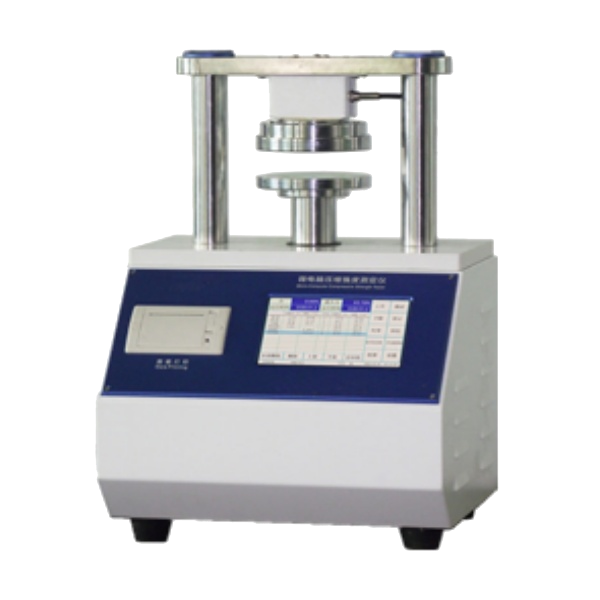
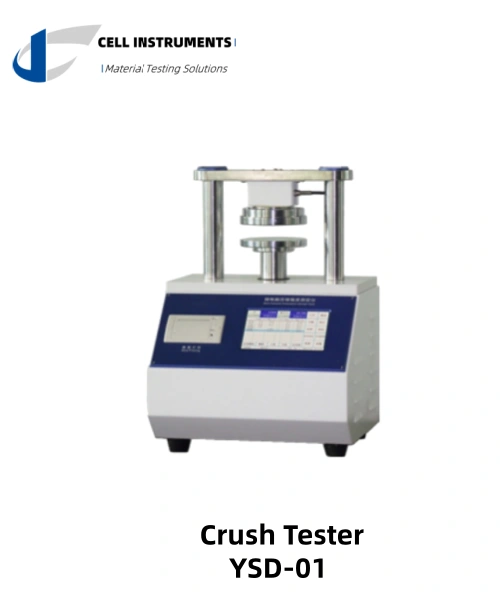
YSD-01 Testeur d'écrasement
Importance des essais mécaniques pour les emballages
Les essais mécaniques évaluent la résistance des matériaux d'emballage à des forces telles que l'empilage, la compression et la manutention. Des tests tels que résistance à l'écrasement à plat fournir des informations sur les capacité de charge de carton ondulé.
Par exemple, dans une étude comparant les Flûte en si et Flûte en do les panneaux de cannelure C ont présenté environ 20% : résistance supérieure à l'écrasement à plat, ce qui les rend adaptés aux produits plus lourds. En évaluant ces propriétés, les fabricants peuvent réduire les dommages causés aux produits, optimiser l'utilisation des matériaux et garantir la conformité aux normes internationales, telles que les réglementations ISO et ASTM en matière d'emballage.
Aperçu des structures en carton ondulé
Les différents types de cartes influencent les résultats des tests et les applications :
Planches à simple face :
Utilisés couramment comme couches de protection dans les emballages multiples.
Panneaux à simple paroi (double face) :
Choix standard pour les cartons d'expédition.
Panneaux à double paroi et microcannelure :
Non couvert par la norme ISO 3035 en raison de l'imprécision des critères d'effondrement.
Par exemple, le test d'un Planche de cannelure B à simple face peut donner une résistance à l'écrasement plate de 2,5 kN/m, alors qu'un cannelure en C à simple paroi pourrait atteindre 3,5 kN/m. Ces données guident les ingénieurs dans le choix des panneaux pour les emballages lourds par rapport aux biens de consommation légers.
Testeur d'écrasement à plat et FCT expliqués
Objectif et importance des essais ISO 3035
L'objectif principal de la norme ISO 3035 est de déterminer les résistance à la compression des plaques ondulées dans des conditions d'écrasement à plat. Les principaux avantages sont les suivants
- S'assurer que les boîtes résistent à l'écrasement pendant le transport et le stockage.
- Évaluer différentes qualités de planches ou de cannelures.
- Optimisation des paramètres de production pour l'efficacité des matériaux.
- Soutenir l'assurance qualité et le respect des normes internationales en matière d'emballage.
Par exemple, une entreprise de logistique peut utiliser la norme ISO 3035 pour comparer les tableaux sous la norme ISO 3035. hauteur des piles de 2 m et plus, Les cartons des couches inférieures conservent leur intégrité et empêchent l'écrasement des produits situés au-dessus.
Méthode d'essai d'écrasement de l'huître
Processus d'essai ISO 3035 : Méthode d'écrasement à plat
En plus de ECT, RCT et FCT, avancé testeurs d'écrasement comme le YSD-01 peut effectuer d'autres tests essentiels :
- Conditionnement : Les éprouvettes sont équilibrées dans une atmosphère contrôlée, généralement 23 ± 2°C avec 50 ± 5% humidité relative.
- Placement : Les pièces sont centrées sur le plateau inférieur.
- Compression : Une force perpendiculaire constante est appliquée jusqu'à ce que la cannelure s'effondre.
- Taux de compression : Les plateaux se déplacent à 12,5 mm/min ± 0,25 mm/min.
- Mesure : Noter la force maximale subie avant l'effondrement de la cannelure.
- Validation : Faire pivoter les échantillons pour corriger les flûtes inclinées et garantir des résultats cohérents.
Les matériaux applicables sont les suivants
- Carton ondulé simple face
- Carton ondulé à simple paroi (double face)
Les planches doivent être exemptes de défauts tels que des déchirures ou des cannelures irrégulières. Les planches à double paroi ou à microcannelure sont exclues pour les raisons suivantes points finaux d'effondrement ambigus, Les résultats doivent être reproductibles et exacts.
Méthode d'essai d'écrasement de l'huître
Matériaux adaptés aux essais ISO 3035
Équipement moderne pour les essais ISO 3035
Des instruments avancés tels que le Cell Instruments YSD-01 Testeur d'écrasement offre :
- Mesure précise de la force et contrôle du plateau
- Enregistrement numérique et exportation de données
- Compatibilité avec ECT et essais d'écrasement à plat
- Résultats reproductibles pour le contrôle de la qualité et les applications de R&D
En pratique, l'utilisation d'équipements modernes permet aux ingénieurs de générer automatiquement des rapports d'essai, Il s'agit d'analyser les tendances dans plusieurs lots de production et d'optimiser efficacement les performances des matériaux.
YSD-01 Testeur d'écrasement
Spécifications techniques
| Paramètres | Spécifications |
| Zone d'essai | (10±0,05) cm² |
| Plage de mesure | (1-9999) S, (1-15)S, (15~300) S, (300~9999) S, commutateur à trois gammes |
| Volume | Grand vide 380±1ml ; petit vide (38±1) ml |
| Plage de vide | Engrenage I 50,66kPa -> 29,33kPa |
| Engrenage II 50,66kPa -> 48kPa | |
| Engrenage III : 50,66 kPa -> 48 kPa | |
| Pression d'essai | (100±2) kPa (pression automatique) |
| Dimension | 380x360x465 mm |
| Puissance | AC 220V 50Hz |
Testeur d'écrasement est indispensable pour les fabricants de papier et d'emballages qui souhaitent garantir la durabilité de leurs produits et respecter les réglementations industrielles. Des tests tels que ECT, RCTet FCT constituent l'épine dorsale de l'évaluation de la performance des conseils d'administration, régie par des normes strictes telles que ISO 3037, TAPPI T811, ISO 3035et bien d'autres choses encore. Avec la YSD-01 Testeur d'écrasement de Cell Instruments, vous avez accès à une solution de test complète, précise, polyvalente et conforme, qui améliore à la fois le contrôle de la qualité et la satisfaction des clients.
- Instruments cellulaires
Questions fréquemment posées sur le testeur d'écrasement
Quels matériaux peuvent être testés à l'aide de la norme ISO 3035 ?
La norme ISO 3035 convient pour à face unique et carton ondulé à simple paroi (double face). Il n'est pas applicable aux double paroi ou panneaux de microcannelure parce que le critère d'effondrement est ambigu. L'utilisation de matériel standardisé garantit des résultats fiables et reproductibles. résultats des essais d'écrasement à plat, qui sont essentiels pour la conception de l'emballage et le contrôle de la qualité.
Comment la résistance à l'écrasement à plat est-elle mesurée dans la norme ISO 3035 ?
Les essai d'écrasement à plat consiste à placer un échantillon au centre d'un testeur d'écrasement plat et en appliquant une force perpendiculaire à une vitesse contrôlée (12,5 mm/min ± 0,25 mm/min) jusqu'à ce que la cannelure s'effondre. Les force maximale enregistrée représente la résistance de la carte. Par exemple, un Planche de cannelure en C peut résister 320 N, tandis qu'un Flûte en si ne peut atteindre que 260 N, ce qui permet des comparaisons pour les applications d'emballage.
Comment la norme ISO 3035 contribue-t-elle à améliorer la qualité des emballages ?
L'essai ISO 3035 évalue résistance à la compression des plaques ondulées, Les boîtes peuvent ainsi résister aux contraintes liées à l'empilage et au transport. En combinant les résultats avec les Test ECT ou norme d'essai d'écrasement des anneaux les fabricants peuvent sélectionner les meilleures qualités de carton, minimiser les défaillances de l'emballage et assurer une protection constante des produits pendant l'expédition et le stockage.

Obtenez la meilleure solution avec nous
Poursuivons la communication.

Prendre contact
No. 5577 Gongyebei Rd, Licheng, Jinan, 250109, Shandong, P.R.C.
marketing@celtec.cn
+86 185 6001 3985
 FR
FR  EN
EN  AR
AR  BG
BG  CS
CS  DA
DA  DE
DE  EL
EL  ES
ES  ET
ET  FI
FI  HU
HU  ID
ID  IT
IT  JA
JA  KO
KO  LT
LT  LV
LV  NB
NB  NL
NL  PL
PL  PT
PT  RO
RO  RU
RU  SK
SK  SL
SL  SV
SV  TR
TR  UK
UK