ECT-TESTEN
ISO 3035
Standaard ringverpletteringstest
Over ons
Overzicht van ISO 3035
ISO 3035 specificeert een gestandaardiseerde methode om de platdrukweerstand van golfkarton. Deze methode richt zich op enkelzijdig en enkelwandige platen, Dit geeft een betrouwbare meting van de mate waarin cannelures bestand zijn tegen loodrechte drukkrachten.
In de praktijk stelt ISO 3035 testen fabrikanten in staat om te controleren of een golfkarton voldoet aan de minimaal vereiste compressiesterkte, Dit is essentieel voor gestapelde palletzendingen. Een karton dat niet aan de norm voldoet, kan leiden tot productschade of financiële verliezen als gevolg van geplette dozen tijdens het transport.

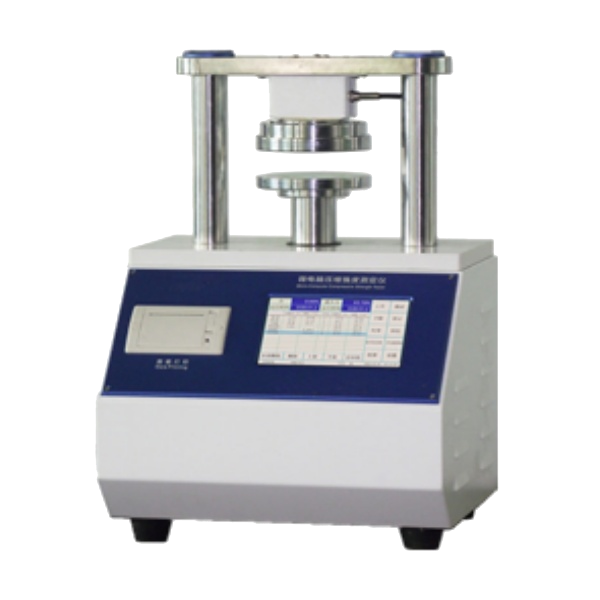
YSD-01 pletmeter
Het belang van mechanische testen voor verpakkingen
Mechanische testen evalueren hoe goed verpakkingsmaterialen bestand zijn tegen krachten zoals stapelen, comprimeren en hanteren. Tests zoals platdrukweerstand bieden inzicht in de draagvermogen van golfkarton.
In een onderzoek waarin bijvoorbeeld B-fluit en C-fluit planken, C-vormige planken vertoonden ongeveer 20% hogere weerstand tegen platdrukken, waardoor ze geschikt zijn voor zwaardere producten. Door deze eigenschappen te beoordelen, kunnen fabrikanten productschade beperken, het materiaalgebruik optimaliseren en zorgen dat ze voldoen aan internationale normen, zoals ISO en ASTM verpakkingsvoorschriften.
Overzicht van golfkartonconstructies
Verschillende soorten printplaten beïnvloeden de testresultaten en toepassingen:
Enkelzijdige borden:
Vaak gebruikt als beschermlaag in multi-packing.
Enkelwandige (dubbelwandige) platen:
Standaard keuze voor verzenddozen.
Dubbelwandige en microgolfplaten:
Niet gedekt door ISO 3035 vanwege onduidelijke eindpunten.
Bijvoorbeeld het testen van een B-flute plank met één zijde kan een vlakke kreukelweerstand opleveren van 2,5 kN/m, terwijl a enkelwandige C-spaanplaat kon bereiken 3,5 kN/m. Dergelijke gegevens helpen ingenieurs bij het kiezen van platen voor zware verpakkingen versus lichte consumentengoederen.
Flat Crush Tester en FCT uitgelegd
Doel en betekenis van ISO 3035 testen
Het belangrijkste doel van ISO 3035 is het bepalen van de druksterkte van golfkarton onder vlakke pletomstandigheden. De belangrijkste voordelen zijn:
- Ervoor zorgen dat de dozen bestand zijn tegen pletten tijdens transport en opslag.
- Het evalueren van verschillende plankkwaliteiten of fluting ontwerpen.
- Productieparameters optimaliseren voor materiaalefficiëntie.
- Ondersteuning van kwaliteitsborging en naleving van internationale verpakkingsnormen.
Een logistiek bedrijf kan ISO 3035 bijvoorbeeld gebruiken om planken te vergelijken onder stapelhoogtes van 2 m en hoger, Zorgt ervoor dat de dozen op de onderste lagen intact blijven en dat de producten erboven niet geplet worden.
Oher Crush-testmethode
ISO 3035 testproces: Vlakke verbrijzelingsmethode
Naast ECT, RCT en FCTgeavanceerd testers zoals de YSD-01 kan andere essentiële tests uitvoeren:
- Conditie: Teststukken worden geëquilibreerd in een gecontroleerde atmosfeer, meestal 23 ± 2°C met 50 ± 5% relatieve vochtigheid.
- Plaatsing: De stukken worden gecentreerd op de onderste plaat.
- Compressie: Er wordt een constante loodrechte kracht uitgeoefend totdat de ribbels instorten.
- Compressiesnelheid: De platen bewegen met 12,5 mm/min ± 0,25 mm/min.
- Meting: Registreer de maximale kracht die wordt uitgeoefend voordat de fluting bezwijkt.
- Validatie: Roteer monsters om scheve groeven te corrigeren en consistente resultaten te garanderen.
Toepasbare materialen zijn onder andere:
- Vezelplaat met enkele rand
- Enkelwandig golfkarton (dubbelzijdig)
Platen moeten vrij zijn van defecten zoals scheuren of ongelijke groeven. Dubbelwandige of microgolfplaten zijn uitgesloten vanwege dubbelzinnige instortingspunten, om reproduceerbare en nauwkeurige resultaten te garanderen.
Oher Crush-testmethode
Materialen geschikt voor ISO 3035 testen
Moderne apparatuur voor ISO 3035 testen
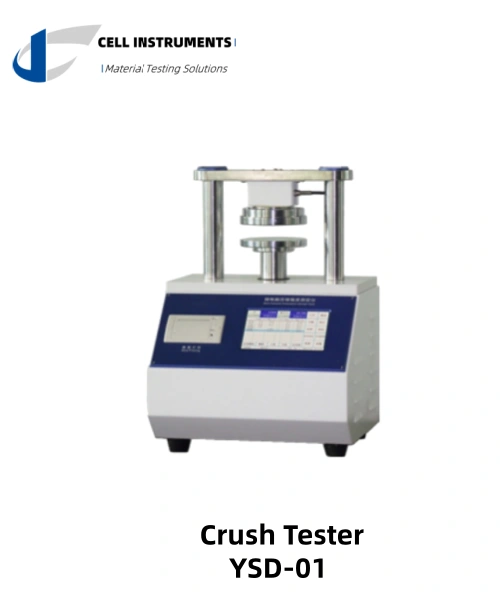
Geavanceerde instrumenten zoals de Cell Instruments YSD-01 Crush Tester aanbieden:
- Nauwkeurige krachtmeting en drukplaatregeling
- Digitaal opnemen en exporteren van gegevens
- Compatibiliteit met ECT en platdrukken testen
- Reproduceerbare resultaten voor zowel kwaliteitscontrole als R&D-toepassingen
In de praktijk stelt het gebruik van moderne apparatuur ingenieurs in staat om automatisch testrapporten genereren, Trends in meerdere productiebatches analyseren en de materiaalprestaties efficiënt optimaliseren.
YSD-01 pletmeter
Technische specificaties
| Parameter | Specificatie |
| Testgebied | (10±0,05) cm² |
| Meetbereik | (1-9999) S, (1-15)S, (15~300) S, (300~9999) S, schakelaar met drie bereiken |
| Volume | Groot vacuüm 380±1ml; klein vacuüm (38±1) ml |
| Vacuümbereik | I versnelling 50.66kPa -> 29.33kPa |
| II tandwiel 50,66kPa -> 48kPa | |
| III versnelling: 50.66kPa -> 48kPa | |
| Testdruk | (100±2) kPa (automatische druk) |
| Afmeting | 380x360x465 mm |
| Stroom | AC 220 V 50 Hz |
Crush tester is onmisbaar voor papier- en verpakkingsfabrikanten die de duurzaamheid van hun producten willen garanderen en willen voldoen aan de industriële regelgeving. Tests zoals ECT, RCTen FCT vormen de ruggengraat van de prestatie-evaluatie van de raad van bestuur, onderworpen aan strikte normen zoals ISO 3037, TAPPI T811, ISO 3035en nog veel meer. Met de YSD-01 pletmeter van Cell Instruments krijgt u toegang tot een complete testoplossing die nauwkeurig, veelzijdig en compliant is, wat zowel de kwaliteitscontrole als de klanttevredenheid bevordert.
- Cel Instrumenten
Veelgestelde vragen over Crush Tester
Welke materialen kunnen worden getest met ISO 3035?
ISO 3035 is geschikt voor enkelzijdig en enkelwandig (dubbelwandig) golfkarton. Het is niet van toepassing op dubbelwandig of microgolfplaten omdat het eindpunt van de collaps dubbelzinnig is. Het gebruik van gestandaardiseerde materialen zorgt voor betrouwbare en reproduceerbare testresultaten platdrukken, die cruciaal zijn voor het verpakkingsontwerp en de kwaliteitscontrole.
Hoe wordt de weerstand tegen platdrukken gemeten in ISO 3035?
De platdruktest houdt in dat een monster centraal op een platdruktester en het uitoefenen van een loodrechte kracht met een gecontroleerde snelheid (12,5 mm/min ± 0,25 mm/min) totdat de cannelures bezwijken. De maximale kracht opgenomen staat voor de weerstand van het bord. Een C-fluit kan weerstaan 320 N, terwijl een B-fluit kan alleen 260 N, waardoor vergelijkingen voor verpakkingstoepassingen mogelijk zijn.
Hoe helpt ISO 3035 bij het verbeteren van de verpakkingskwaliteit?
ISO 3035 testen evalueren de druksterkte van golfkarton, zodat de dozen bestand zijn tegen stapelen en transport. Door resultaten te combineren met ECT testen of ringverbrijzelingstest standaard Met deze gegevens kunnen fabrikanten optimale kartonkwaliteiten selecteren, verpakkingsfouten minimaliseren en zorgen voor een consistente bescherming van producten tijdens transport en opslag.


Neem contact op
No. 5577 Gongyebei Rd, Licheng, Jinan, 250109, Shandong, P.R.C.
marketing@celtec.cn
+86 185 6001 3985
 NL
NL  EN
EN  AR
AR  BG
BG  CS
CS  DA
DA  DE
DE  EL
EL  ES
ES  ET
ET  FI
FI  FR
FR  HU
HU  ID
ID  IT
IT  JA
JA  KO
KO  LT
LT  LV
LV  NB
NB  PL
PL  PT
PT  RO
RO  RU
RU  SK
SK  SL
SL  SV
SV  TR
TR  UK
UK